


Steve Jobs did not know how to code. He probably did not even know how to build a toaster. But he knew how to imagine. Better than anyone.
In the ’80s and ’90s, Apple – like IBM, Microsoft, Xerox and all the giants of the era – had research and development centers staffed with brilliant scientific minds, true champions of computer science and engineering.
Those people could do anything. You just had to ask them.
Those departments, on closer inspection, were an analog form of artificial intelligence: extremely powerful, hyper-specialized, and remarkably fast at finding solutions to achieve tomorrow the goals that yesterday seemed impossible.
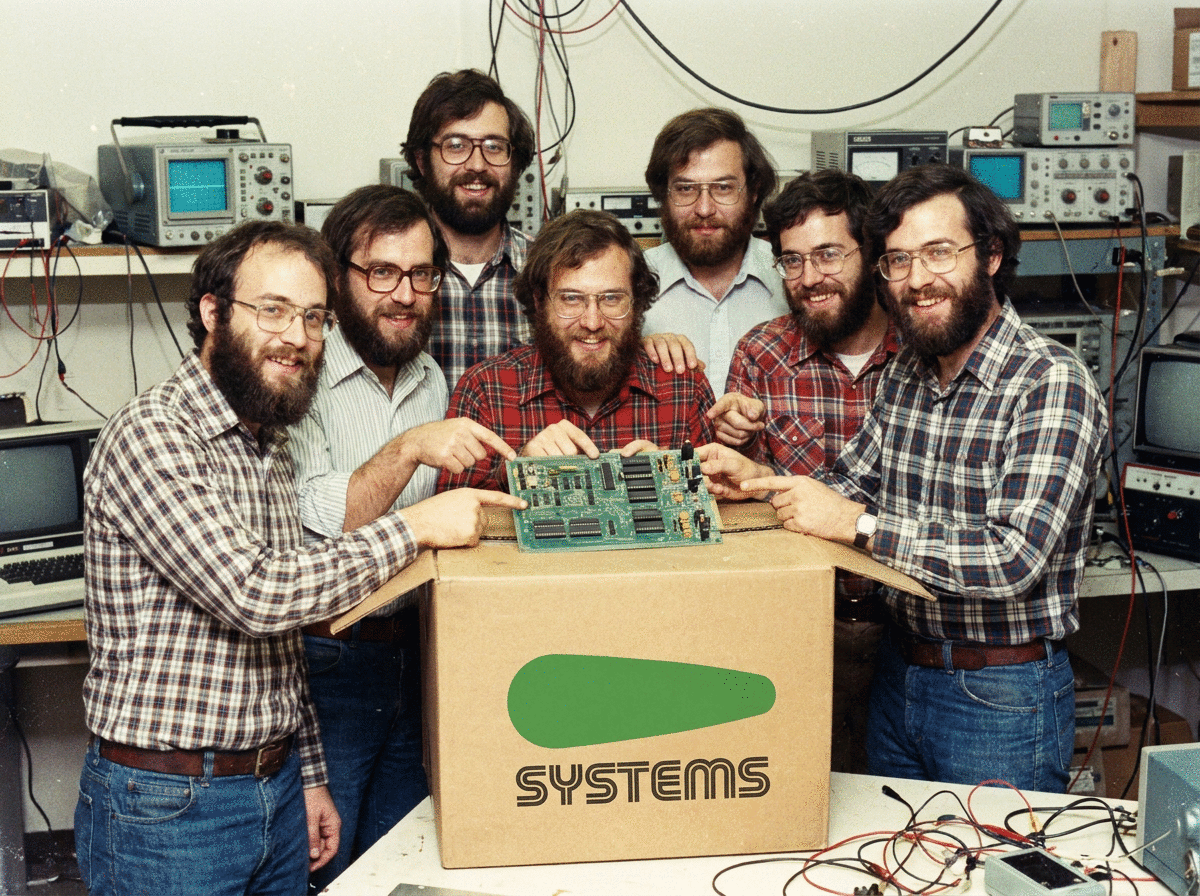
They were a sort of AI ante litteram: not made of algorithms, but of flesh and neurons (and a lot, a lot of nerdiness).
And so the question naturally arises:
If everyone had access to this intelligence, why did only Jobs come up with the iPod?
Why was he the only one to ask for the iPhone?
Why was it always him who asked for the iPad?
The answer is simple: because he knew what to ask for.
And he had the courage to ask for things that others could not even imagine.
Jobs was not the genius of technology. He was the genius of vision.
He could look beyond what was possible and turn it into a simple, direct, concrete request: “I want a little box that holds all the music in the world.” “I want a phone with no buttons.” “I want the iPad to turn on before anyone even realizes why they need it.”
Now, come back to the present for a moment.
ChatGPT, Midjourney, Copilot, Gemini, Claude, Synthesia, and so on.
The new generation of artificial intelligence promises to do everything: copy, images, code, music, presentations, strategies, budgets, social content, naming, logos, advertising concepts, market forecasts, communication plans.
.png)
But really?
Sure, if we open ChatGPT and write “make me a website for a pizzeria,” it will do it: it will draw inspiration from what already exists and give you a new version. If that is enough for you, go in peace.
.png)
If instead you want a website for a pizzeria that stands apart from the rest, perhaps you could get it with AI—but, unfortunately for you, you would already need to have built it in your analog intelligence, namely in your head. You have to imagine the revolutionary style, creative copy that converts, and decontextualized, striking images. If you know you want the iPad, it will build it for you. But before it existed, no one could even imagine it.
So AI alone is not enough. But it helps.
It helps if you know what to ask.
Just like those hyper-performing R&D labs, AI is a powerhouse, yet it remains an executive machine. It performs brilliantly if you tell it exactly what to do. If you prompt it the right way, you get remarkable results. If instead you throw a generic, simplistic, unprofessional request at it, it hands you back a lukewarm soup—standard, devoid of insight, devoid of soul.
Generic content, without vision. Without direction. Without character. Without novelty. Without anything.
And here is the point:
The easier AI makes it to produce things, the harder it will be to create things that actually make sense.
The more AI simplifies the process, the more we will need people capable of imagining what to truly do with it.
Professionals who can interpret a need, spot a trend, dig into the audience’s language, sharpen a brand’s identity, and translate all of this into precise questions.
People who can imagine where to go, not just how to get there.
And if today the whole world has a smartphone in their pocket, it is because someone knew how to ask for the impossible.